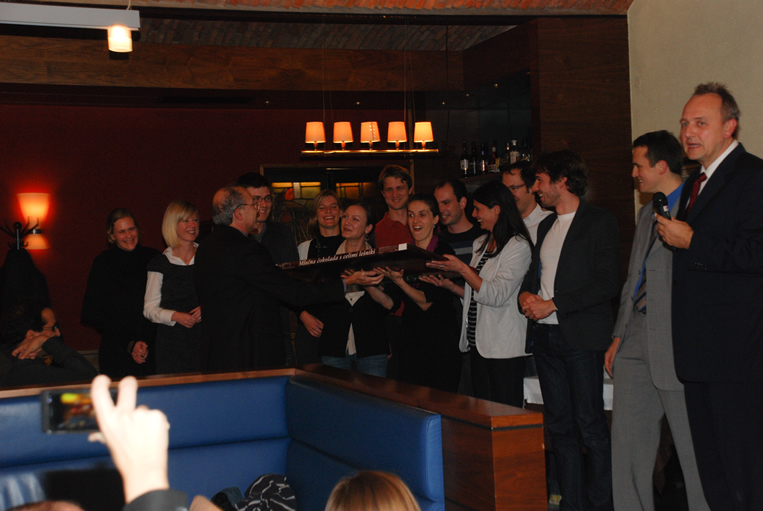
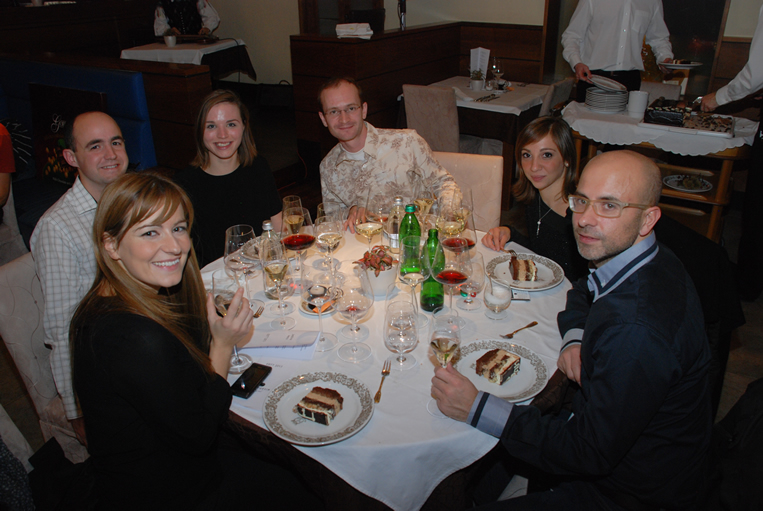
Electroporation-Based Technologies and Treatments — International Scientific Workshop & Postgraduate Course · tenth-anniversary edition
The meeting
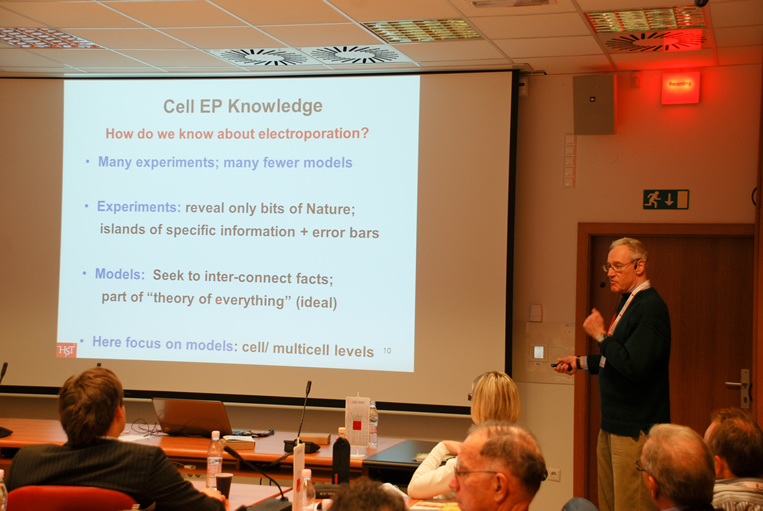
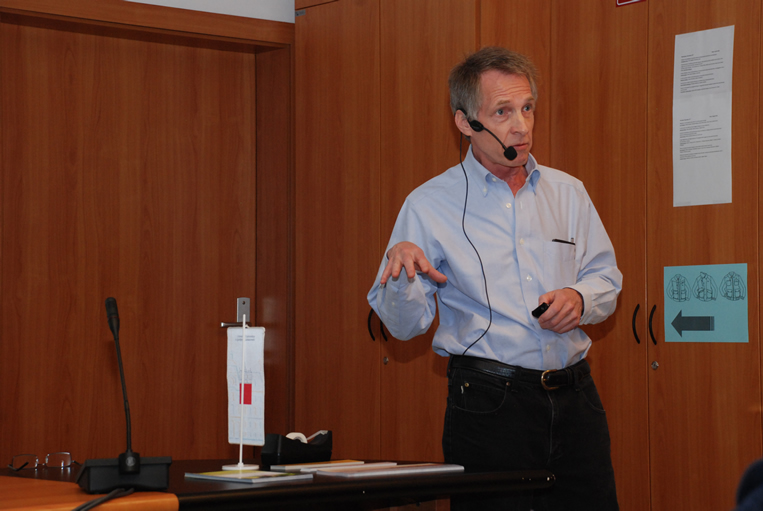
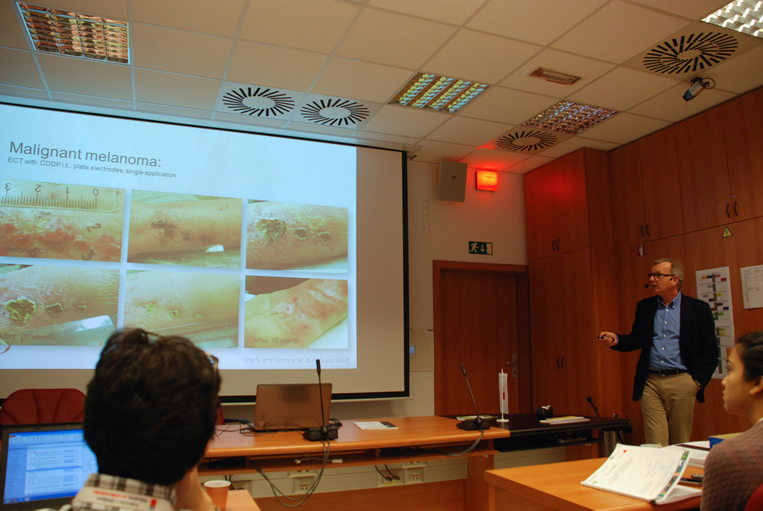
Cell membrane electroporation, its mechanisms and applications in biology, medicine and biotechnology. The basis of the phenomena, current applications and future prospects were the main topics of this international meeting — the tenth in the EBTT series (2003–2013).
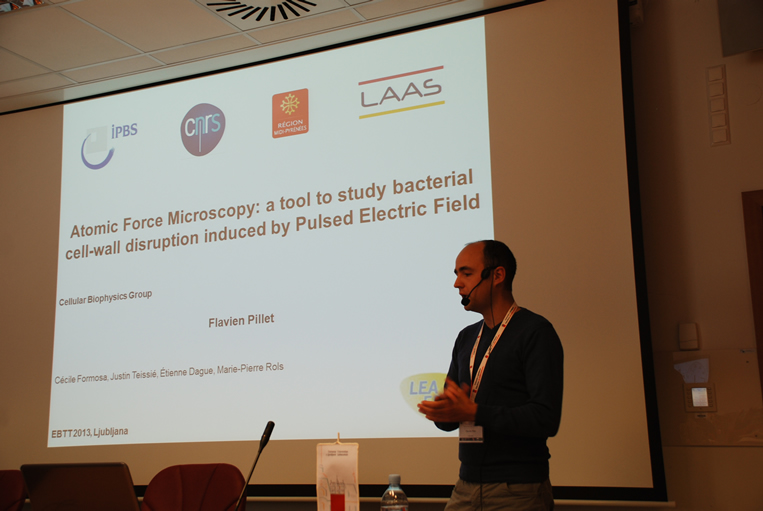
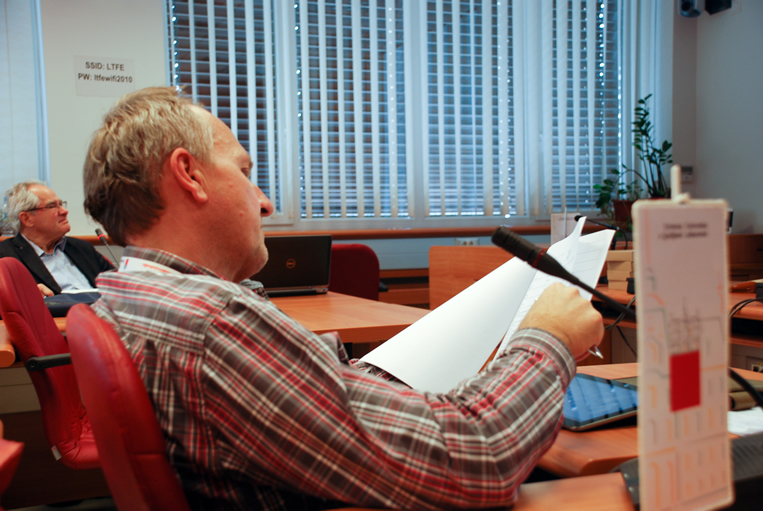
The postgraduate course was intended both for novices and experts in electroporation, including PhD students, researchers and users. Abstract submission was strongly encouraged and was necessary if credits (5 ECTS) were sought; each participant submitting an abstract also gave a short oral presentation. The course was accredited by the Medical Chamber of Slovenia, so active and passive participants received 20 CME credits.
Organised by the University of Ljubljana and the Institute of Oncology, Ljubljana. Organising committee chair: Peter Kramar. Members: Maša Kandušer, Matej Kranjc, Selma Čorović, Saša Haberl, Duša Hodžić, Bor Kos, Alenka Maček Lebar, Nataša Pavšelj, Marko Ušaj, Jaka Čemažar. · The postgraduate course was co-financed by the European Social Fund and the Ministry of Education, Science and Sport within the Operational Programme for Human Resources Development 2007–2013.
Course content
Resting & induced transmembrane voltage; dielectric properties; temperature & conductivity changes.
Electrochemical membrane thermodynamics; molecular dynamics simulations.
Electroporation of cells in vitro and in vivo.
Devices & electrodes for in vitro/in vivo; tissue models and their validation.
Mechanisms, preclinical & clinical use, developments & perspectives.
Gene transfection in vitro/in vivo; clinical use in human medicine.
Gene delivery in the skin; DNA vaccines.
EP-based resource-efficient process development for healthy foods (D. Knorr); microbial inactivation by PEF (J. Raso); DNA-vaccination protocols by electrotransfer (E. Signori); intracellular access by electroporation (J. Weaver).
Faculty
Hands-on
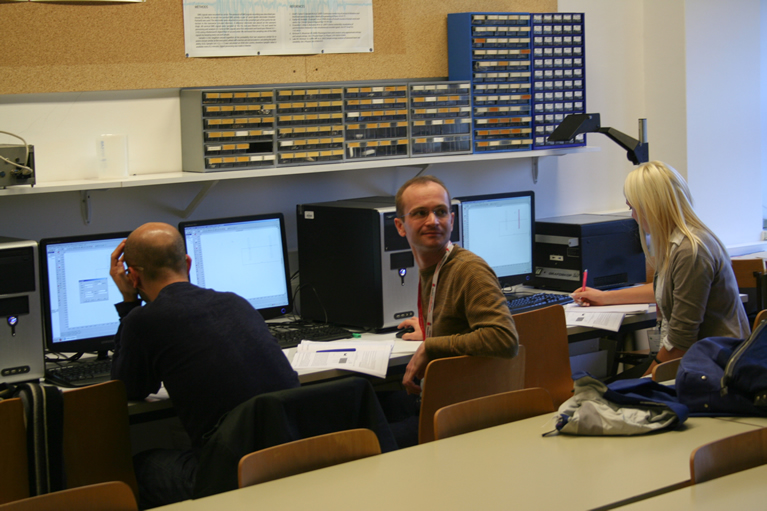
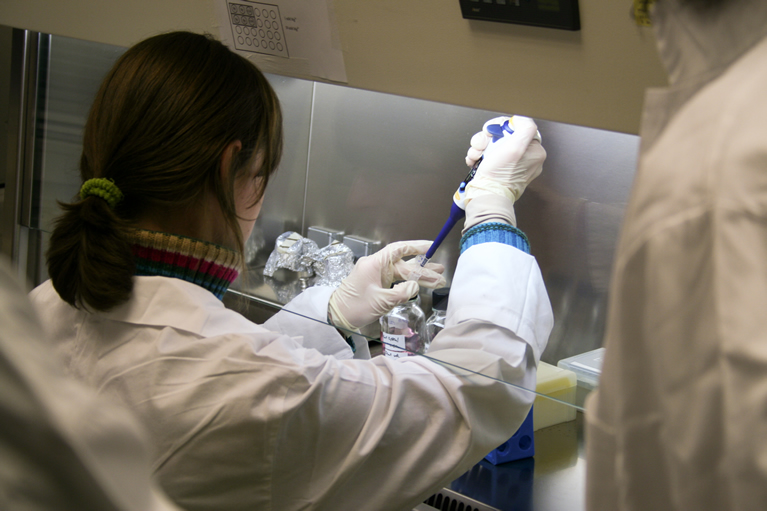
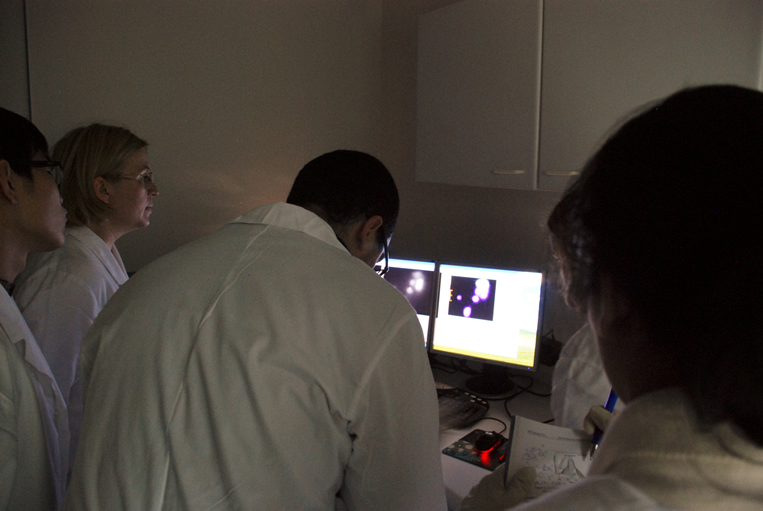
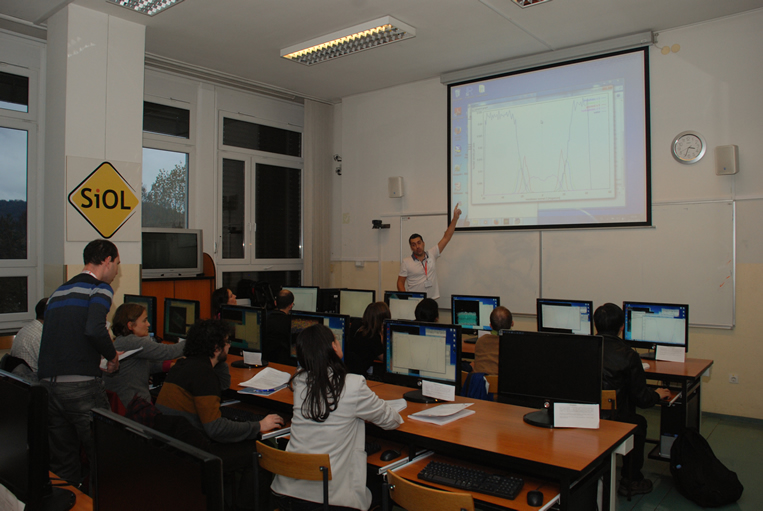
Wet-lab, computer-modelling and e-learning sessions. Participants could select up to three practical-work sessions from wet-lab and modelling, and both from computer simulation and e-learning.
| S1 | Laboratory safety |
| L1 | The influence of Mg2+ ions on gene electrotransfer efficiency |
| L2 | Monitoring cell membrane electroporation with ratiometric fluorescent dye Fura-2AM |
| L3 | Electropermeabilization detection with propidium iodide in plated cells |
| L4 | Measurements of the induced transmembrane voltage with fluorescent dye di-8-ANEPPS |
| L5 | Irreversible electroporation of bacterial cells |
| L6 | Electroporation of planar lipid bilayers |
| L7 | Cell electrofusion |
| L8 | Analysis of electric field orientations on gene electrotransfer — efficiency & visualization at the membrane level |
| L9 | Skin electroporation |
| L10 | Study of lightning-mediated irreversible electroporation on E. coli |
| C1 | Electrochemotherapy treatment planning: optimization of voltage & electrode position |
| C2 | Numerical modelling of thermal effects during irreversible electroporation treatments |
| C3 | Molecular dynamics simulations of membrane electroporation |
| E1 | Electroporation of cells and tissues — interactive e-learning |
Abstracts & publication
Participants submitted an abstract, presented as a short oral talk, and were encouraged to submit a full manuscript for a special issue of the Journal of Membrane Biology devoted to electroporation-based technologies and treatments, guest-edited by P. T. Vernier, L. M. Mir and D. Miklavčič.
Two types of papers were considered — regular (more than 3 journal pages) and short (2–3 journal pages). The deadline for full-paper submission to the Journal of Membrane Biology was extended until 19 January 2014.
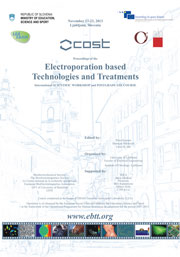
Electronic proceedings — book of abstracts & course material.
Distributed to participants as the EBTT 2013 book of abstracts.
Getting here & staying
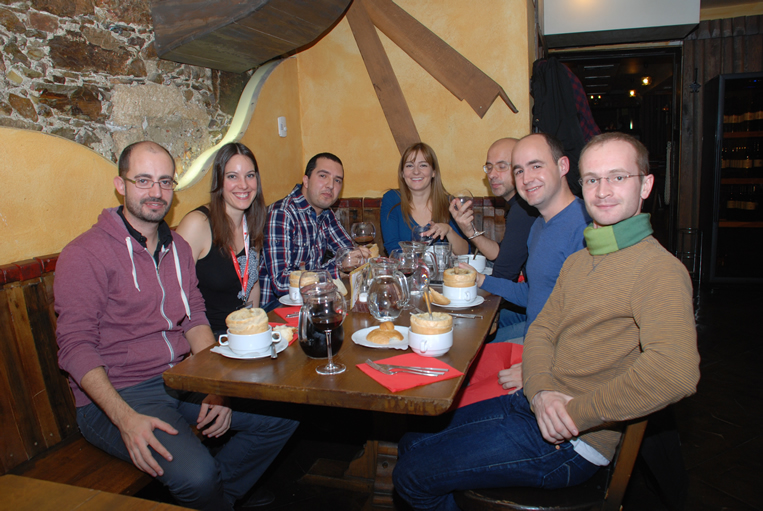
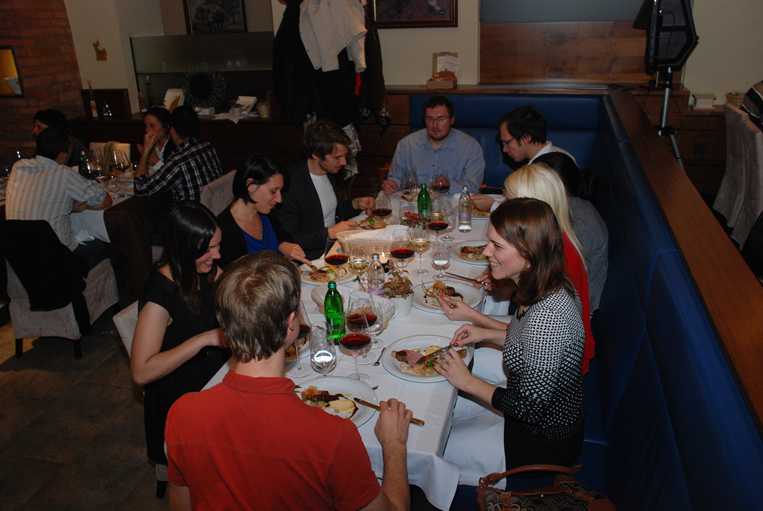
Held at the Faculty of Electrical Engineering, University of Ljubljana (Tržaška 25, Ljubljana). Lectures, laboratory sessions and social events took place in and around the faculty and Ljubljana city centre.
City centre, by Kongresni trg
Near Kongresni trg
Dom podiplomcev — Gostišče Jamnik, Cesta na Vrhovce 4
Contacts